A Smarter Way to Investigate Hidden Defects
Traditional inspections are often limited to what can be seen from the surface. A bore scope allows us to look beyond plasterboard, behind fitted units and into concealed construction without immediately resorting to destructive opening-up works. In many cases, this provides valuable evidence that helps determine whether further investigation is genuinely necessary.
For homebuyers, this means greater peace of mind before committing to a purchase. Hidden defects that might otherwise remain undiscovered can often be identified at an early stage, allowing informed decisions to be made and, where appropriate, repair costs to be negotiated before contracts are exchanged.
FAQ Section
What is a bore scope inspection?
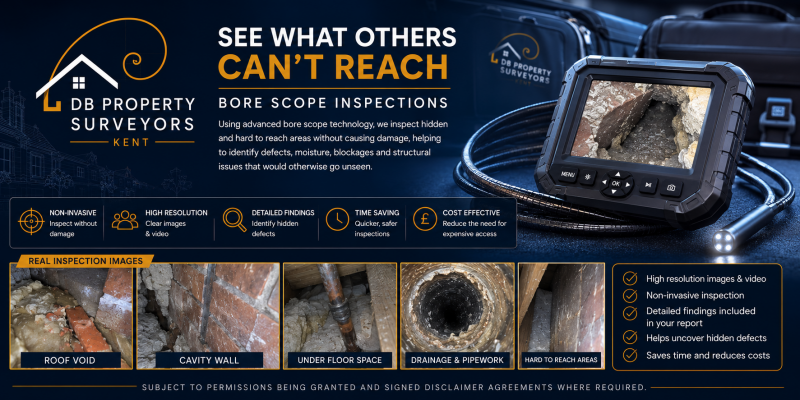
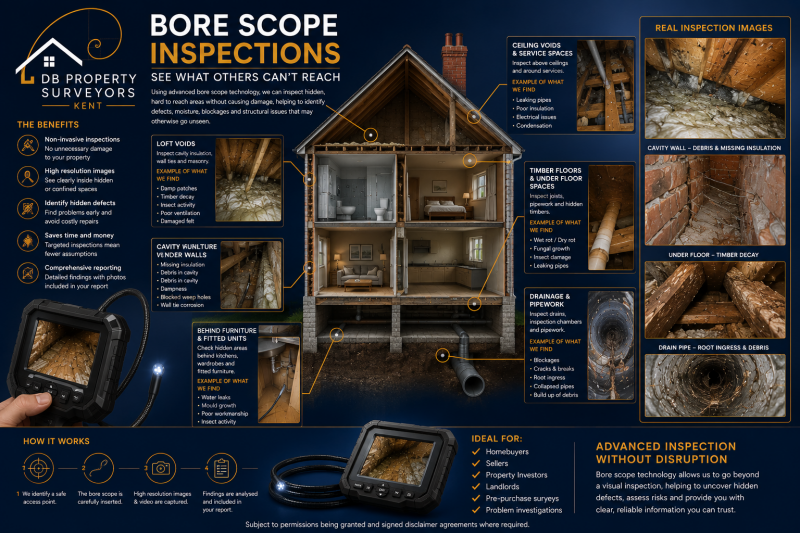
A bore scope inspection uses a high-definition miniature camera to inspect hidden or inaccessible areas of a property without unnecessary damage. It helps identify concealed defects that may not be visible during a standard inspection.
What can a bore scope find?
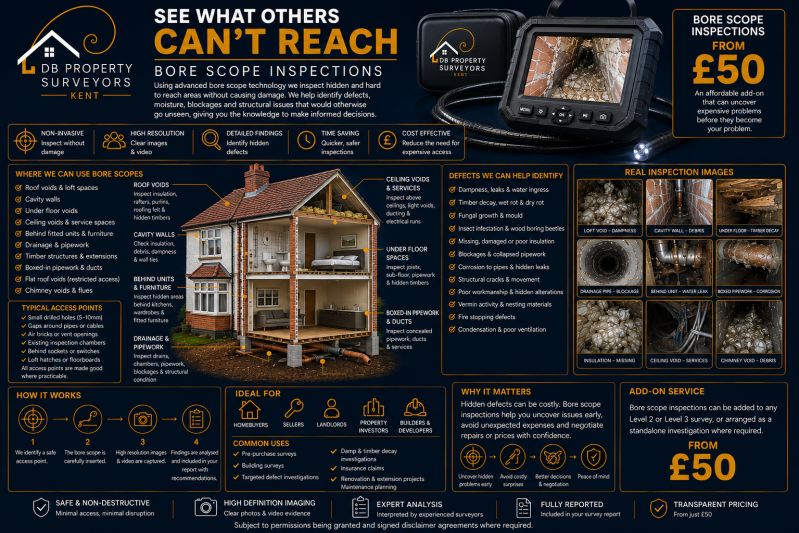
A bore scope can identify dampness, timber decay, fungal growth, insect infestation, missing insulation, hidden plumbing leaks, cavity wall debris, poor workmanship, structural issues and blocked drainage components.
Is a bore scope inspection destructive?
No. In most cases, inspections are carried out through existing openings or very small access points, keeping disruption to an absolute minimum. Where minor access is required, this will only be undertaken with the owner's permission and, where appropriate, signed disclaimer agreements.
Can I add a bore scope inspection to my survey?
Yes. Bore scope inspections can be added to your Level 2 HomeBuyer Survey or Level 3 Building Survey, or arranged separately to investigate a specific concern.
How much does a bore scope inspection cost?
Bore scope inspections start from £50. The final cost depends on the number of areas requiring inspection and the level of investigation needed.